Let go of stress breathing exercises you can do at home.
Let go of stress breathing exercises you can do at home.
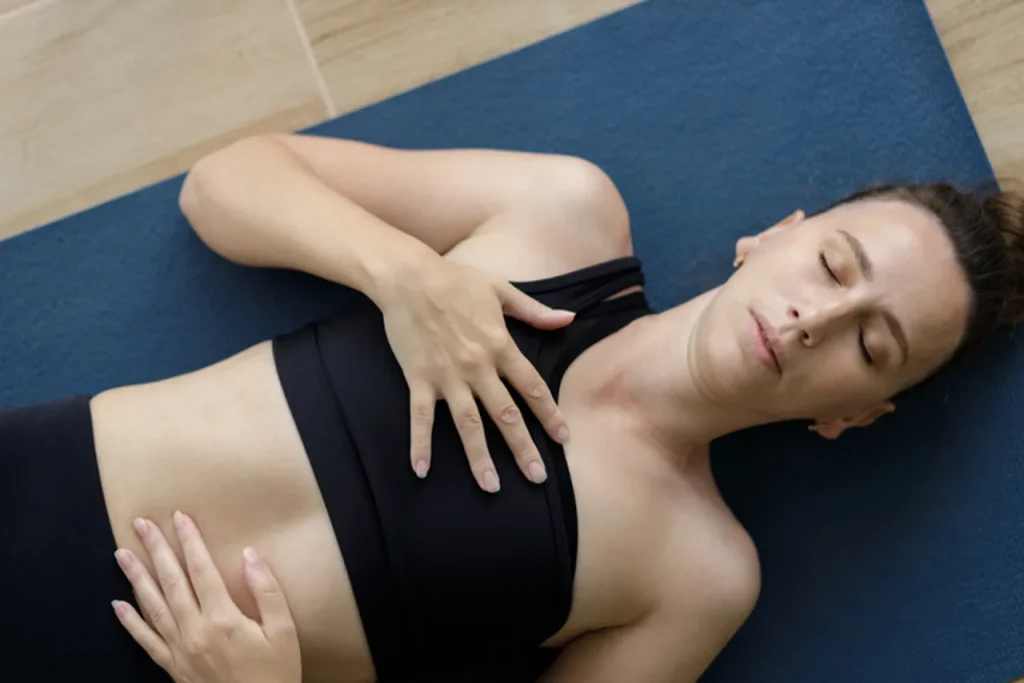
In today’s society, which is full of stress around us every day, many people are looking for different ways to relieve stress. But another method that we can do easily without having to invest anything is “breathing exercises” that can help relieve stress by ourselves. We have 5 methods to recommend.
Things to know before practicing breathing exercises for relaxation
- Find a quiet place. The best times are in the morning and before bed.
- You should practice every day and practice regularly.
- Sit or lie on your back with your eyes closed in a comfortable position where no one will disturb you.
- Wear loose clothing and remove shoes and accessories.
- Relaxation training is not a direct treatment for disease.
- If you suffer from certain medical conditions or have mental or emotional problems, you should consult a doctor. Relaxation exercises should not be used as a replacement for treatment.
1. Pursed lip breathing
This simple breathing technique slows down our breathing, requiring conscious effort with each breath.
We can practice pursed-lip breathing at any time, which helps us feel relaxed while doing activities such as bending, lifting, or climbing stairs. Practice this breathing exercise 4 to 5 times a day to learn the correct breathing pattern.
method:
- Relax your neck and shoulders.
- Close your mouth and inhale slowly through your nose for 2 seconds.
- Pout or purse your lips as if you are about to whistle.
- Exhale slowly by blowing air through your pursed lips for a count of 4 seconds.
2. Diaphragmatic breathing
Diaphragmatic breathing, also หากคุณสนใจเล่นพนันออนไลน์ที่ดีที่สุด สามารถสมัครสมาชิก UFABET ได้ที่นี่ พร้อมรับโปรโมชั่นพิเศษสำหรับสมาชิกใหม่ known as abdominal breathing, allows us to use our diaphragm properly.
This type of breathing exercise is helpful for people who have breathing problems due to chronic obstructive pulmonary disease (COPD), heart problems, or cancer. It may also help reduce stress and help address a variety of health issues, such as:
- Eating Disorders
- constipation
- High blood pressure
- Migraine headache
Practice diaphragmatic breathing for 5 to 10 minutes, 3 to 4 times a day. At first, it may feel tiring, but with time, the technique will become easier and feel more natural.
method:
- Lie on your back with your knees stress breathing exercises slightly bent and your head supported by a pillow.
- You may want to place a pillow under your knees for support.
- Place one hand on your upper chest and the other hand below your ribs so you can feel the movement of your diaphragm.
- Inhale slowly through your nose, feeling your belly press against your hands.
- Keep your other hand as still as possible.
- Exhale through pursed lips as you contract your abdominal muscles, keeping your upper arms still.
- You can place a book on your stomach to make the exercise more difficult.
- Once you learn how to do belly breathing while lying down, you can increase the difficulty by trying it while sitting in a chair. You can then practice this technique while doing your daily activities.
3. Breath focus technique
This deep breathing technique uses a mental image or a word that brings a sense of well-being or relaxation, such as the words “peace”, “let go”, or “relax”, or any word that brings a sense of well-being that can be repeated throughout the breathing exercise.
When creating a breathing exercise, you can start with a 10-minute session and gradually increase the duration until your session is at least 20 minutes long.
method:
- Sit or lie down in a comfortable place.
- Bring your focus to your breathing without trying to change the way you breathe.
- Alternate between normal and deep breaths a few times. Notice the difference between normal and deep breaths. Notice how your belly expands as you take a deep breath.
- Notice how shallow breathing feels compared to deep breathing.
- Practice your deep breathing for a few minutes.
- Place one hand below your belly button, keeping your belly relaxed, and notice how it rises with each inhale and falls with each exhale.
- Let out a loud sigh with each exhale.
- Begin a breathing exercise by combining these deep breaths with visualization and a focused word or phrase that will promote relaxation.
- You can imagine the air you breathe sending waves of calm and relaxation throughout your body. Say to yourself, “Breathe in peace and relaxation.”
- Imagine that the air you exhale washes away tension and anxiety. You can say to yourself, “Exhale tension and anxiety.”
4. Lion’s breath
Lion Breath is an energizing yogic stress breathing exercises breathing exercise that can help relieve tension in our jaw and facial muscles. It is known in yoga as Lion Pose or Simhasana in Sanskrit.
method:
- Sit in a comfortable position. You can sit on your heels or cross your legs.
- Press your palms against your knees with your fingers spread wide.
- Take a deep breath through your nose and open your eyes wide.